
...solve thorny business challenges in the time it takes to drink a cup of tea
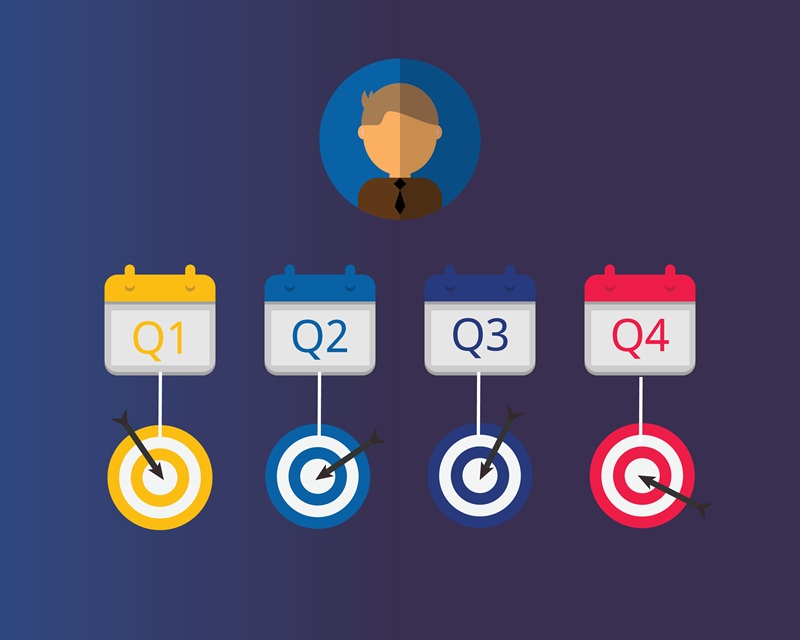
For your accountancy firm to survive and thrive, how often should you set your goals?
©Piscine26/Shutterstock_1835665723
A simple business idea connects Google, Intel, and other high-growth businesses…
It’s almost too simple to share, but it works!
Late in the 1990s, 17 different search engines were fighting it out to dominate the web.
Then the 18th search engine started up – Google.
Normally, such a latecomer wouldn’t stand a chance, having given the others such a head start.
How do you achieve rapid growth?
So how did this business start-up repeatedly experience massive annual growth whilst managing the most volatile and tumultuous changes in technology?
Google did this by using a method that ensured business-wide focus on a handful of important priorities.
This has continued as Google has grown, and every 13 weeks (for the last 20+ years) Google’s leadership team evaluate the business's progress against a handful of top-level priorities.
Every single person in the business is clear on Google’s priorities for that quarter and the key measures used to evaluate progress.
This business idea is now firmly embedded at Google: OKRs, or Objectives and Key Results.
What are OKRs?
In his book, Measure What Matters, John Doerr introduces the powerful concept of OKRs, a goal-setting framework that has transformed some of the world’s most successful businesses, including Google.
OKRs can help your firm focus on what truly matters by setting clear, measurable goals and by aligning teams toward shared priorities. In today’s fast-paced and competitive environment, OKRs are essential because they create transparency, foster accountability, and encourage ambitious thinking.
By measuring progress against defined outcomes, your firm can move from ideas to execution with clarity and confidence, ensuring that every effort contributes to strategic success and your team gain a huge sense of achievement too!
Have a single quarterly priority focus, share it across all your team and set up ways to track activities and results.
If you set out to change three things or more, you’ll dilute the focus (or you’ll need a bigger team). Instead, work out what to (and what not to) focus on for this quarter.
Start quickly with 4 helping hands here or read on for the full Bitesize Business Breakthrough. Use your device's back arrow to return to this point.
Here's the proven solution for you...
Work out the OKRs (Objectives and Key Results) for your firm:
- 1Focus on one significant Objective in the next 13 weeks – give clear
direction to your team - 2Measure what matters (Key Results) to help you achieve your goal – set
measurable milestones to monitor progress
Here are John Doerr's thoughts on OKRs:

“OKRs are a vaccine against fuzzy thinking”
John Doerr - Measure What Matters
OKRs make an impact...
Here is a great example of the impact that OKRs made on Intel. It's important to note that Intel now control more than 70% of the integrated circuit market worldwide – evidence that OKRs work.
Intel’s adoption of OKRs in the 1970s marked a turning point in modern management. Faced with fierce competition in the semiconductor industry, CEO Andy Grove introduced OKRs to bring clarity and focus to Intel’s strategic priorities.
Instead of vague goals, Intel began setting clear objectives paired with measurable key results, which allowed teams to align their efforts and track progress transparently.
This disciplined approach helped Intel pivot successfully from memory chips to microprocessors, ultimately dominating the market.
The difference OKRs made to Intel was profound. Using them transformed Intel from a business struggling with uncertainty into a high-performing one driven by accountability, alignment, and measurable outcomes.
Less is more...
You already know that if you spread your time, effort, energy, and team across too many projects, you’ll complete very little. Frustration will dominate your feelings.
Your results will be poor, your team disheartened.
Use your device's back arrow to return to this point.

@freepik
...so, choose your priority
The dictionary definition of a priority is:
a thing that is regarded as more important than others.
This means working out which projects you need to downgrade or exclude from your efforts for the next 13 weeks, while you focus on your primary goal.
To join the ranks of Intel and Google, simply focus on one significant Objective in the next 13 weeks. What one primary goal do you wish to achieve in this quarter?
At the end of the quarter, you then move on to focus on the next significant objective with key results for the following 13 weeks.
Key Results are time-sensitive and specific measurements to help you monitor progress in achieving your primary goal this quarter.
Important or urgent?
Most business leaders will consistently say yes to requests from their clients and team, and often to their own ideas. Their to-do list gets longer and longer with ever more urgent priorities.
A firm running only on urgent priorities will perform less well in the long term than a firm that also focuses on one strategic priority every 13 weeks – a strategic priority that may not be seen as urgent, but which is important to the growth of the firm.
For example, if you wish, you can put off hiring a key person for a couple of months, or you can delay reorganising your stock control system for a whole year.
These strategic projects remain important and will probably hold your firm back if you delay them.
However, strategic projects require high levels of commitment. Taking on more than one large project at any time may be paralysing without the resources to follow through, so make one of them your primary goal for the next 13 weeks…and then move on to the next one the following quarter!
Right time right place...
John Doerr worked with Andy Grove, CEO of Intel, and witnessed how Grove turned Intel into the world’s dominant integrated circuit producer – with the help of OKRs.
After leaving Intel, John invested in Google in its start-up phase and introduced OKR insights learned from his time working at Intel.
Five key messages from John's book…
- 1OKRs drive focus and alignment – OKRs will enable your firm to concentrate on what truly matters and will align teams toward common goals.
- 2Transparency fuels accountability – Publicly sharing your OKRs creates clarity and ownership across all levels of your firm.
- 3Ambitious goals inspire innovation – Ambitious objectives will push your team out of their comfort zones, fostering creativity and breakthrough results.
- 4Continuous tracking and adaptation – OKRs should not be viewed as ‘set and forget’. Regular check-ins and adjustments are essential for success.
- 5Culture matters as much as framework – OKRs will thrive only if you create an environment that values openness, learning, and collaboration
STOP : thinking you can do multiple business projects at the same time
START : making hard choices and exclude all but one priority for the next 13 weeks
Put 4 superpowers to work...

©Freepik
In John Doerr’s book Measure What Matters, he describes four ‘OKR superpowers’, the core benefits that Objectives and Key Results (OKRs) unlock when used well:
Superpower 1 – Focus and commit to priorities
OKRs force firms and individuals to choose what truly matters. By limiting objectives, teams concentrate energy on the highest-impact work.
High-performance firms home in on one priority, but they are equally clear on what doesn’t matter for the next 13 weeks.
OKRs compel leaders to make hard choices on what to exclude from their focus for the next 13 weeks.
Build a list of things you should (or even must) do to improve your firm's performance.
When you have your list, choose the one priority that will get your full attention for the next 13 weeks.
Then move on to the next priority for the following quarter.
Using the 4 superpowers suggested by John Doerr’s experience at Intel and Google, move yourself and your business…
...from ‘Could do’ all sorts...to ‘Must Do’ one thing.
OKRs ensure all of your people are connected to your priority and will remove any doubt about what you’re ‘gunning’ for this quarter.
Superpower 2 – Align and connect for teamwork
OKRs make goals transparent across the firm, helping teams see how their work connects to others and to the business purpose, vision, and values.
Each OKR brings transparency about what’s important this quarter.
OKRs also make everyone’s goals, from the directors down, openly available for everyone to see.
As a result, every team member links their personal work goals to the firm’s clear priority. Teams and individuals collaborate, clear on what the outcome is.
With your firm’s clear priority identified, you can work with your people on what actions you and they are responsible for.
Superpower 3 – Track for accountability
Clear, measurable key results allow progress to be monitored regularly, creating shared accountability and enabling course correction.
OKRs are driven by data. What measures will help you track performance?
You and your team will be energised by regular check-ins, objective grading, and continuous review, all in a spirit of no-judgment accountability.
Should a key result look in danger of failing, your reporting prompts action to get it back on track or to revise or replace it if necessary.
Superpower 4 – Stretch for amazing
Ambitious goals encourage innovation and bold thinking, pushing teams beyond incremental improvements, even if not every goal is fully achieved.
OKRs motivate you to excel by doing more than you’d thought possible.
Bringing ambition to your quarterly priority infuses energy and a striving into your thinking and actions.
By testing your limits and affording the freedom to fail, they release your most creative, ambitious selves.
Can you get your team’s buy-in to an ambitious goal?
Using clearly defined and time-sensitive OKRs will channel everyone’s efforts and bring a sense of purpose and unity to everyone in your firm.
Are you now ready to set your business goals for your firm, every 13 weeks, so that your firm can grow and beat your competition?
4 helping hands for you…
Something as simple as making a priority focus for 13 weeks, sharing it across all your team, and setting up ways to track activities and results sounds simple.
But most owners and managers are busy being busy. Good people being busy just want to get on with things. Planning is using up valuable time when they could be working!
However, by agreeing on one core focus (priority) for the next 13 weeks you’re doing what Google has done more than 80 times since it started up in the late 1990s!
Worth giving it a go, don’t you think?
1
Write out a list of ALL the goals you have for your firm.
2
Choose ONE priority OBJECTIVE for you and your team to focus on in the next 13 weeks.
Leave the other goals for another time.
3
Ensure everyone is clear on the handful of KEY RESULTS that together will deliver your OBJECTIVE.
Work out how to benchmark and monitor these activities.
4
Make sure your leaders are seen and heard giving your firm’s OKRs their wholehearted and committed support and diary time.
TIME TO DISAGREE
“Being open and transparent about performance results is new to us and will shock our people”
It pays to handle performance management carefully, especially if it’s new or hasn’t worked in the past for you.
Try concentrating on team activity key results rather than individual activity measures.
Talk these activities through with your team and the key people so that together you can work out measurable activities for everyone to achieve your key results and objectives.
“Big business OKRs for tech companies just won’t suit my small local firm”
In John Doerr’s book, you’ll find stories about OKRs working for pizza and healthcare companies, not just tech. On Doerr’s website, you’ll see OKRs working for a single freelancer business, as well as for a university! Does ‘size of business’ really matter?
We don’t think so.
A lack of focus derails individuals, businesses and even governments.
To achieve your goals requires focus. You might have ambitious goals for your firm. You might have grand plans to achieve them. But work overload (busy-ness) either prevents you from getting started or slows you down. Time scarcity holds you back from implementing change.
Setting a single priority for the next 13 weeks means most of the other (normal) work can get done, and one important change priority can also get done at the same time.
Set out to change three things or more, and you’ll continue to be swamped. Instead, focus.
"What if my team want more money when we start measuring performance?”
John Doerr points out that: “Google is careful to segregate raw goal scores from compensation decisions.”
Ask your team to test the OKR process before getting into performance-related payments.
Measures of Key Results don’t show context, outside influences, other people’s contributions, and many other factors. Prove the OKR concept first and, when you are successful, you’ll have the funds to say thank you to those who have contributed to the success.
The science of motivation shows that our intrinsic motivation (we all want to do a good job for the sake of doing a good job – purposeful work) is the most powerful motivation we all have.
There’s a lot of evidence showing that financial incentives can reduce intrinsic motivation.
ULTIMATE ARGUMENT:
“How do I know that using OKRs will pay off for my accountancy firm?”
Intel, Google, YouTube, a pizza company, a healthcare company, an educational homework service, as well as many more examples, suggest that all businesses can use OKRs to help them grow.
It’s worth testing, and you can test it in 13 weeks! So why not give it a go?
If you need more convincing, get John Doerr’s book and read the examples of businesses successfully implementing OKRs and how they did it.
Your 'Make It Happen' checklist:
Are you ready to choose business goals that help your firm thrive?
The energy and enthusiasm you see at every sporting event would vanish if there were no hoop, goal post, or try line.
Remove all ambiguity and doubt from your team about where you’re heading – your goal (your OBJECTIVE), and what needs to be done to get there (your KEY RESULTS) – and you’ll be on the road to choosing the right goals, even in times of uncertainty.
OKRs do not work in isolation from the culture of your firm or the commercial realities of your sector or industry, but they do raise the chances of succeeding in your sector.
With quarterly OKRs, Google beat 17 other established search engines. Intel beat Motorola in their sector. What can you and your team achieve using OKRs?
1
Superpower 1 – Focus and Commit to Priorities
Build a list of things you should (or even must) do to improve your firm’s performance.
When you have your list, choose the one priority that will get full attention for the next 13 weeks.
2
Superpower 2 – Align and Connect for Teamwork
With your clear priority identified, work with your team on what actions you and they are responsible for. Make it clear to everyone.
3
Superpower 3 – Track for Accountability
OKRs are driven by data. Work out the activities and measures that will help you track performance.
4
Superpower 4 – Stretch for Amazing
Bringing ambition to your quarterly priority infuses energy and a striving into your thinking and actions. Can you get your team’s buy-in to an ambitious goal?
Want to know more?

Measure What Matters
John Doerr
If you’re serious about the success of your firm,
you should read John Doerr’s book.
He shares many more OKR stories and examples working for a wide selection of businesses, from healthcare to education, software to pizza.
Here’s what Bill Gates, co-founder of Microsoft Corporation, says about John’s book:

“I’d recommend John’s book for
anyone interested in becoming a
better manager”
Bill Gates
YOUR SUPPORT TOOLS ARE HERE:
Go to the button below and you'll find a selection of practical support tools to help you focus on the goals that will enable your firm to thrive.
Find the support tools to help you
This report is shared by
