
...solve thorny business challenges in the time it takes to drink a cup of tea
What if your ideal clients already want to buy from you - even before YOU know THEIR name?

©FreePik
What if you could create a version of your accounting firm where your ideal clients find YOU, rather than you doing the grunt work of finding THEM?
You know this is working when a high-value prospective client says: 'I need to speak to you – because people in my industry tell me you really understand a business like mine.’
You also know it’s working when you and your firm are positioned, in the hearts and minds of prospects and clients, as an indispensable expert.
Positioning is a skill available to every accountancy firm willing to make a definitive positioning decision. Most firms are afraid, reluctant, or unclear about how to make this expert positioning happen.
And most firms don’t make this positioning commitment, even though it can be profoundly valuable to clients, to the team, and to the long-term success of their firm.
The financial payoff
There is clear evidence that specialist firms generate higher fees per full-time employee (FTE) than those that are generalist. A firm with £140k per FTE looks and feels very different from a firm with less than £100k per FTE.
Salaries will likely be higher in a specialist firm, of course – but not all salaries. And the fees per FTE differences result in a lot of wiggle room for paying team members more.
But first you must achieve expert positioning.
What specialist positioning might suit your firm?
Being a sector niche specialist is one way...
Fold one specialism into another, and you become an expert that earns greater trust and value – a niche within a niche is powerful.
...but staying a generalist is easier and can feel safer!
The hard costs of avoiding expert positioning are real. And this cost accumulates quietly and consistently, eroding margin and your future prosperity.
COST A. Every new business conversation is an uncomfortable sales pitch.
Without expert positioning, you must earn credibility from scratch in every prospect meeting. You’re pushing to achieve credibility. A well-positioned firm walks into a meeting already trusted and respected. Experts are pulled into working rather than having to push/sell their services.
COST B. Referrals are random.
A generalist firm gets referred to anyone needing an accountant. An expert or specialist gets referred to people in their specialism by clients and introducers who recognise the value of their expertise. Reputation builds faster and deeper for a specialist; not so for a generalist.
COST C. Generalists work harder.
A generalist’s knowledge is diluted in comparison to that of a specialist. A generalist always starts fresh. A specialist's knowledge is compounded as more clients are served in a specific sector – the more patterns you see, the better your advice becomes, and the more trustworthy and valuable you become. All of this will add to your confidence.
COST D. The fee glass ceiling.
Generalists have hundreds of competitors, and so they are often compared on price. Specialists are compared on outcomes and on value. Expert positioning breaks through the pricing and profitability glass ceiling.
The payoff is obvious...
The specialist expert is typically in more demand, commands higher fees, and converts new clients easier and faster than the generalist.
The specialist can say no, or not yet, when it suits them – and prospective clients will wait for them.
Specialist firms consistently command a significant premium over generalists in professional services because clients perceive them as lower risk.
They’ve done the work before. They’ve earned their stripes. They know things the generalist doesn’t.
The specialist wins on trust, wins on referrals, wins on price, and wins on cross sales as well. Higher profitability follows naturally.
So, what positioning should you choose?
It’s not simply ‘which niche should I pick?’ The real decision is: am I willing to be remarkable to a few, rather than just adequate to many?
This decision is a strategic commitment you should actively consider. You can dismiss it if it’s not what you want. But please don’t sleepwalk through the next 2-5 years, accidentally growing a generalist firm.
Blair Enns, on how to build expert positioning:

“...positioning is not a discovery. You don’t wait for a niche to emerge organically over the years. You choose one. Deliberately. And then you go and build it.”
Blair Enns, The Win Without Pitching Manifesto
Expert positioning is valuable and profitable. But even if you decide to position your firm as an expert, there are more hurdles to overcome:
THE SERVICES TRAP
Most firms describe what they do – audit, tax, accounts, payroll, etc. That’s a service menu, not a position. It tells a prospect what you’re capable of. It says nothing about why you are the only logical choice for them. You sound just like every other (potentially cheaper) accounting firm when you have a service focus.
THE WRONG KIND OF BUSY
Without clear positioning for your firm, you take whoever calls. You are reluctant to say no, even if it’s to the wrong type of client. You fill your workflow plan with any client you can win but rarely achieve pricing and profitability that reflects your capabilities. Being a busy generalist means hidden costs that are hard to measure (or to see!).
BUT SAYING NO IS HARD
It can be very difficult to turn away what appear to be good generalist clients. But when say yes to everyone, you become the specialist for no one.
Expert positioning is a deliberate choice to be the only logical answer to a specific question, for a specific kind of client.
Position your firm clearly and build your expertise credibly, and the right clients will find you – the wrong ones will self-select out – and you’ll never compete on price again. It takes commitment, action, and time to work.
Step 1: Decide. Expert positioning is a choice, not a discovery.
Most accounting firms wait. They think their niche will reveal itself in time. Maybe it will, but, by then, ten years might have passed, and competitors will have built the reputation you were waiting to discover.
Blair Enns’ first proclamation in his book, The Win Without Pitching Manifesto, is stark: ‘We will specialise.’ Not ‘we will discover our specialism in time.’ A decision. Made today.
A good-enough positioning decision made clearly and acted on consistently will outperform a perfect one that’s never made. The business world rewards conviction. It ignores ambiguity.
In Practice: Write this sentence: ‘We are the only accounting firm that [specific thing] for [specific client].’ If you can’t write it cleanly, you haven’t made the decision yet. The sentence that makes you slightly nervous is usually the right one.
Step 2: Choose your axis, using the five ways to position your business.
Enns identifies the axes on which service firms can position themselves:
1. By sector or vertical
You serve a specific industry, for example, dental practices, creative agencies, or property developers. You know the benchmarks and KPIs that matter. The owner reads your positioning and thinks: ‘Finally! Someone who understands us already.’
2. By the problem you solve
You specialise in a specific transformation, preparing owner-managed businesses for sale, managing cash flow through scaling, and turning compliance-only relationships into advisory ones. This is powerful because clients search, not just for accountants, but for solutions to problems.
3. By client type or stage
Start-ups in their first three years. Family businesses navigating succession. Businesses between £1m and £10m in turnover. Each stage brings specific, repeatable challenges, and the specialist who knows them commands immediate trust.
4. By geography
A filter, not a position. Useful when combined with one of the above; weak on its own.
5. By combination
The most powerful position of all: ‘We are the tax specialists for high-growth tech founders in their first five years.’ Sector + Problem + Stage. Very few firms can claim this. If you can, you’re not competing with anyone.
Most accounting firms position themselves by service: ‘We offer audit, tax, accounts, and payroll.’ Every other firm in your region says the same thing.

@freepik
Start quickly with 4 helping hands here or read on for the full Bitesize Business Breakthrough. Use your device's back arrow to return to this point.
Step 3: Claim your position, then build it.
You don’t have to earn the right to call yourself a specialist before you announce it. You choose the position, and you make the claim. Then you build the expertise and reputation to back it up.
For example, you don’t become the leading accountant for creative industries by waiting until you have thirty creative industry clients. You become it by deciding that’s who you serve, then you behave like the expert:
- talk about creative industry finance with specificity
- show up where those businesses gather
- go way beyond ‘the extra mile’ and do excellent work for the first five specialist clients who trust you; the first five becomes ten, then ten becomes twenty
Step 4: Demonstrate expertise where your customers already look.
An expert position isn’t just claimed, it’s demonstrated. Here are four specific ways to build it:
Publishing
Write about the specific financial challenges your target clients face. Not just generic tax tips, but specific, opinionated content about the pressures your ideal clients are navigating right now. One article that a dental practice owner reads and thinks ‘they really get us’ is worth a thousand words about your audit service.
Speaking
Find the events where your target clients gather. Show up. Share a perspective, not a pitch. The accountant speaking at the regional property investors’ breakfast isn’t selling. She’s demonstrating expertise in the room where her best clients already sit.
Research
Run a survey. Compile benchmarks. Produce an annual report on the financial health of businesses in your niche – data is authority. The firm that owns the data becomes the firm others reference and eventually call.
A point of view
What do you believe that most accountants in your market don’t? That belief, when stated clearly and argued well, is rarer and more valuable than any credential.
In practice: Pick one of the four. Write 500 words on the sector-specific topic you know best. Publish it. That’s the first brick.
One small step every week
Imagine investing just 30 minutes every week, without fail, on building your credibility where you want to be expertly positioned. You’ll then achieve a 1%, 2%, or 3% shift every week. In 12 months, you’ll have expertly positioned yourself and your firm.
When you are genuinely positioned as the expert, the client calls you. They come having already decided they want to work with you, not just to ‘explore their options.’ The conversation isn’t ‘tell me about your services’ – it’s ‘how do we start?’
That’s what Enns means when he says the expert is the prize, not the contestant. The prize doesn’t audition. The prize is sought. The ability to say no – to the wrong client, the wrong scope, the wrong fee – follows directly from a clear expert position.
The Virtuous Cycle: Serve a niche, learn more, become better at serving it, attract more clients, charge more. Each client makes the next one easier to win. Each year, the compound interest of deep sector expertise increases your advantage over every generalist in the market.
What's holding you back?
Fear of turning clients away
Positioning doesn’t mean firing every existing client tomorrow. Stop marketing broadly; start marketing specifically. Let the current base stabilise while you build the positioned pipeline alongside it.
The conviction that your best work isn’t niche-specific
Without a position, that value is invisible to the clients who most need it. Positioning doesn’t diminish what you do – it makes it findable.
Not knowing which niche to choose
Look at where your best clients already are. Which sector do you most enjoy? Where have you already accumulated real insight, perhaps without realising it? The right niche is often already visible in your existing client list.

©FreePik
STOP : thinking that being a generalist is the safest and easiest option
START : positioning yourself as an expert
4 helping hands to get you started…
1
Audit your current client base
Group clients by sector, type, and work. Where do you already have three, five, eight in the same space? That cluster is the beginning of your position.
2
Write your expert intention sentence
‘We are the only accounting firm that [specific thing] for [specific client].’ Write five versions. The one that makes you slightly nervous is usually the right one.
3
Choose one publishing outlet
Find the sector journal, LinkedIn group, or association newsletter where your target clients gather. Write one piece about their most pressing financial challenge.
4
Attend one sector event
Find the conference or networking forum where your ideal clients meet. Attend and listen – don’t pitch. The relationships that result are worth more than any advert.
Don’t keep it to yourself
Have the positioning conversation with your team. They need to understand and believe the position before clients will. The partner or team member who can’t explain the firm’s specialism to a prospect is the firm’s biggest positioning problem.
The ultimate question: What would you call yourself, if you weren’t afraid to be specific?
TIME TO DISAGREE
“Our clients come from every sector. We’d be turning away too much good work.”
You wouldn’t. You’d be turning away work that takes you away from your chosen positioning.
Every client you take from outside your specialism reinforces your generalism and prevents the compounding of sector expertise.
You don’t have to exit overnight. But you do have to start.
“We already have a strong local reputation. That’s our position.”
Local reputation is about reach, not differentiation. When a dental practice in your town needs a new accountant, ‘well-known locally’ competes with every other well-known local firm – on price. ‘Specialises in dental practices’ ends the conversation.
Geography is a filter, not a position.
“I don’t have enough expertise in any one area to claim to be a specialist.”
You likely have more than you think. The partner who has served fifteen manufacturing businesses over twelve years knows the cash flow seasonality, the stock pressures, the export challenges, and the apprenticeship levy nuances. They just haven’t named it yet.
Expert positioning isn’t about having a PhD. It’s about knowing more than the next firm about a specific world – and being willing to claim it.
ULTIMATE ARGUMENT:
“How do I know expert positioning will work for my accountancy firm?”
Look at the firms in any professional services market that compete on expertise rather than on price.
They are almost always the ones that positioned deliberately.
The specialist who serves thirty dental practices doesn’t compete with the generalist down the road. She doesn’t pitch. She doesn’t discount. She charges more, works with better clients, and has a waiting list – because in her corner of the market, there is no better alternative. The expert is the prize!
The discomfort of the decision is real. The cost of not making that decision is also real – it just accumulates slowly and quietly, year after year, in the gap between what your firm earns and what it could.
What would you call yourself if you weren’t afraid to be specific?
Want to know more?
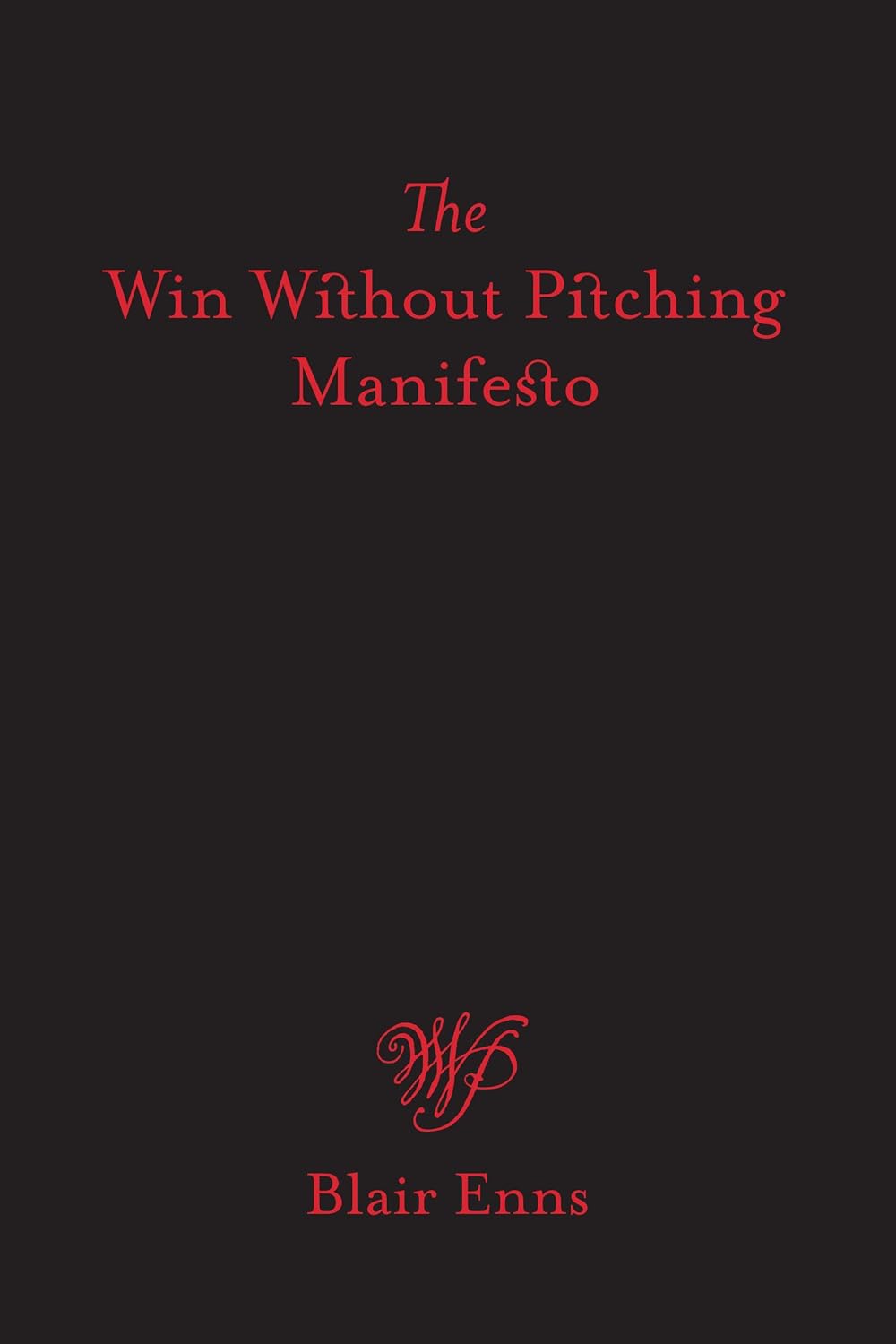
The Win Without Pitching Manifesto
Blair Enns
This book is the source for the positioning insights in this report. Twelve proclamations. No filler. Read it in a morning. It will challenge assumptions you’ve held for years and give you the vocabulary to have the conversations your firm needs – about what you stand for, who you serve, and why that matters. The book is available at winwithoutpitching.com.
YOUR SUPPORT TOOLS ARE HERE:
Use these tools and resources to build the positioning skills and habits that will make your firm remarkable to the right clients.
Find the support tools to help you


© Remarkable Practice Ltd 2020 - All rights reserved