They Win You Win Tools and Resources

...solve thorny business challenges in the time it takes to drink a cup of tea
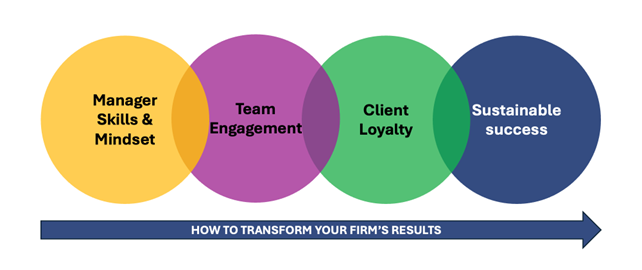
How do you achieve incredible business results AND build a team for sustainable success?

@Freepik
How do you build an engaged team and form meaningful relationships with loyal customers who buy more from you and recommend you to others?
If your team is disengaged, they will have a poor attendance record, miss deadlines, produce poor quality work, be uninterested in their work, and lack the motivation to truly care about your customers.
If this is the case, you have a problem…
…because the loyalty of your customers is directly linked both to the engagement of your team and to the results of your business.
So, think about your team, your clients, and your business, and ask yourself this one question:
STOP expecting your managers to ‘guess’ how to be good managers.
START seeing your manager skills as the magic sauce that helps build team engagement and customer loyalty, which will improve your business results.
The one ‘BREAKTHROUGH QUESTION’ you must ask to help yourself…
“Instead of just more opinions, we need a simpler leadership approach that measurably and predictably delivers more engaged employees and better business results.” – Russ Laraway.
As leaders or owners of businesses, the true measure of your success isn’t just in the numbers you hit, but in how well your team grows, performs, and is engaged and motivated under your management.
As Russ Laraway reminds us in When They Win, You Win, great leadership is built on clarity, coaching, and care. When you give your teams clear direction, invest in consistent feedback, and take an active role in their career growth, you create an environment where your team feel valued and motivated to perform at their best.
The message is simple but profound: when your people feel seen, supported, and developed, you don’t just build a high-performing team, you build a resilient, purpose-driven culture that multiplies success across your entire business.
Sustainable success in your business begins with customer loyalty, because loyal customers return, spend more, and talk about your business to others, all of which creates a stable foundation for growth.
But this loyalty doesn’t happen by chance; its foundation is an engaged team. When your team feel valued and connected to the vision, the values and the core purpose of the business, they actually want to deliver great service and create the kind of positive experiences that customers remember and trust.
In essence, engaged teams build relationships, and those relationships build loyalty, which in turn drives long-term success.
So, what can you do to build the engagement of your team?
You can measure it and then take actions based on the results…
Gallup Q12
"Engaged employees... are thinking about the whole company and how they fit into it, and their ideas lead to better decisions." – Jim Harter, Gallup's Chief Scientist of Workplace Management and Well-Being
The Gallup Q12 survey is a widely used tool for measuring employee engagement within a business. It consists of 12 carefully crafted questions that assess key elements of workplace engagement, such as clarity of expectations, opportunities for development, recognition, and connection to the business's core purpose.
Each question is designed to tap into the psychological needs that drive performance and loyalty, and to help you, as leaders and managers, understand how well your teams are supported and aligned. The results give you actionable insights into how engaged your team are, and where improvements can be made to boost motivation, productivity, and, ultimately, customer satisfaction.
These questions are designed to measure the core elements of employee engagement. Each one reflects a fundamental need that, when met, helps employees thrive:
- Do you know what is expected of you at work?
- Do you have the materials and equipment to do your work right?
- Do you have the opportunity to do what you do best every day?
- In the last seven days, have you received recognition or praise for doing good work?
- Does your supervisor, or someone at work, seem to care about you as a person?
- Is there someone at work who encourages your development?
- At work, do your opinions seem to count?
- Does the mission/purpose of your company make you feel your job is important?
- Are your coworkers committed to doing quality work?
- Do you have a best friend at work?
- In the last six months, has someone talked to you about your progress?
- In the last year, have you had opportunities to learn and grow?
Gallup has studied over 3.3 million workers across 100,000+ teams, all over the world, to understand the effect of team engagement on essential business metrics. Here are just 4 of their results to consider:
Higher team engagement results in:
- 23% higher profits
- 10% higher customer loyalty
- 32% fewer defects
- 78% less absenteeism
Have you ever used the Gallup Q12 survey in your team?
Print these questions off now and involve your whole team – the results might shock you!
The 3 Big Questions

@Freepik
“Once you understand the Big 3 leadership behaviours you want to see, you want to measure the frequency with which those behaviours of direction, coaching and career are being exhibited.” – Russ Laraway, When They Win, You Win
Both the Gallup Q12 survey and Russ Laraway, in his book When They Win, You Win, emphasise that employee engagement is the key driver of business success, and that managers play the most critical role in creating that engagement.
Gallup’s research, including the Q12 survey, shows that 70% of the variance in employee engagement is directly attributable to the manager. Laraway builds on this insight in his book by offering a practical framework called the Big 3:
- Direction (clear expectations and alignment)
- Coaching (regular feedback and support)
- Career (growth and development opportunities)
These three areas closely mirror the themes in the Q12 questions, such as knowing what’s expected, receiving recognition, having development opportunities, and feeling cared for. Laraway’s approach is designed to help managers measurably and predictably improve engagement, which aligns directly with Gallup’s findings that engaged teams deliver better productivity, profitability, and retention.
The leadership and management standards are the one thing in your business that determines sustainable success. Improve these standards, skills and structures, and you will improve team engagement, client loyalty and results.
Your leadership and management standards revolve around the Big 3 conversations you have, or don’t have, with your team.
How often do you have Direction conversations?
How often do you have Coaching conversations?
How often do you have Career conversations?
3 manager conversations and 13 questions (taken from Russ Laraway’s book, When They Win, You Win)
"If we focus our managerial activities on Direction, Coaching and Career, we will have engaged employees who deliver the expected results.” – Russ Laraway
DIRECTION QUESTIONS:
1. How clearly does your manager communicate what is expected of you?
2. How helpful is your manager in prioritising your work, including helping you figure out what not to work on?
3. How collaborative is your manager when agreeing your individual OKRs?*
4. How collaborative is your manager when developing your team’s OKRs?*
5. How helpful is your manager in assisting you to navigate business changes that impact you and your job?
*OKRs = Objective and Key Results for the next 13 weeks. If you want more information about OKRs, please get in touch.
Having a Direction conversation is about creating clarity for your team so everyone knows exactly what matters most and why. Laraway emphasises that many managers think they’re being clear, but the team still feel uncertain.
How many times have you explained something to your team, thought it was clear, but the team still look confused?
Direction isn’t just giving orders; it’s about removing the complexity until only the most important priorities remain.
To help you better deliver against these 5 direction questions, Laraway suggests you focus on these key elements:
Your Purpose and Vision – Define the purpose and vision for your business. This gives the work your team are doing meaning, and they know they are working towards something bigger.
Measurable Goals – Translate your vision into specific, measurable quarterly goals and weekly priorities. These should be simple, actionable, and in line with your business purpose.
Your team's OKRs – Don’t overload your team with too many tasks or priorities. Laraway suggests focusing on the few things that truly matter; clarity beats complexity.
Regular communication – Managers should regularly check that team members understand expectations and deadlines, and adjust priorities as needed.
Having great Direction conversations reduces confusion, increases accountability, and boosts engagement because your team will know what is expected of them, what success looks like and how their work contributes to it.
COACHING QUESTIONS:
6. How frequently does your manager solicit feedback from you?
7. How consistently does your manager provide you with specific praise for good performance?
8. How helpful is the feedback provided by your manager in improving your performance?
9. How responsive is your manager to your ideas or concerns?
10. How comfortable do you feel going to your manager with a safety concern, no matter how small?
11. How much do you agree with the following statement: “My manager cares about me as a human being?"
Having a Coaching conversation is about helping your team improve and grow through consistent, actionable feedback. Laraway emphasises that coaching isn’t a one-time event or an annual review; it’s an ongoing process that combines recognition for what’s working and constructive feedback for improvement. The goal is to create an environment where learning and progress are happening all the time.
To help you better deliver against these 6 coaching questions, Laraway suggests you focus on these key principles:
Frequent Feedback – Give feedback regularly; don’t just wait for the team member’s appraisal. Be consistent and handle the conversation in the right way.
Balance Praise and Improvement – Make sure the team know what went well to reinforce the positive behaviours, while also addressing areas that need work.
Use a Clear Framework – Laraway suggests structuring feedback around three elements:
- Situation: Describe the context or scenario, and stick to the facts.
- Work: Focus on the actual work product or behaviour. What did you observe?
- Impact: Explain the effect on results, the team, or the business, then seek a solution together.
Ask Permission for Tough Conversations – Start with something like: “I think I’m seeing something that might be getting in your way. Are you in a spot where you can hear that right now?” This approach respects the employee and sets the tone for constructive dialogue.
Make It Two-Way – Encourage your team to share their perspective and ideas for improvement. Coaching should be a collaborative learning experience.
Consistent coaching builds trust, accelerates skill development, and improves engagement. Your team will feel supported and understand what they need to do to succeed, which in turn leads to better performance and stronger team results.
CAREER QUESTIONS:
12. How supportive is your manager of your growth and development?
13. (Repeat) How much do you agree with the following statement: “My manager cares about me as a human being?”
Having a Career conversation ensures that there is a focus on helping your team grow in a way that aligns their personal goals with those of the business. Laraway argues that career conversations should go beyond the typical “Where do you see yourself in five years?” Instead, managers should actively engage in understanding what motivates each team member and create a roadmap for their development.
To help you better deliver against these 2 career questions, Laraway suggests you focus on these key principles:
Understand the Whole Person – Career growth starts with knowing what matters most to your team member – their values, interests, and long-term goals. This requires genuine curiosity and listening.
Three-Part Career Conversation Framework – Laraway suggests breaking career conversations into three stages:
Past: Explore the team member’s previous experiences to uncover patterns in what they enjoyed and where they excelled.
Present: Understand what they love about their current role and what challenges they face.
Future: Collaboratively define aspirations and identify skills or experiences needed to get there.
Create a Development Plan – Translate aspirations into actionable steps forward, projects, stretch assignments, mentorship, or training – anything that helps your team progress toward their goals.
Regular Check-Ins – Career conversations shouldn’t be a once-a-year event. They should be ongoing, evolving as your team grows and the business changes.
When your team see that their manager cares about their future, engagement skyrockets. Your team will stay longer, perform better, and feel more connected to the vision, values, and core purpose of the business.
Career development isn’t just good for your team; it’s a strategic advantage for your business.13 Questions to unlock team engagement – how brave are you?

@Freepik
“Managers, you are the keepers of engagement, and companies succeed to the extent that their employees are engaged. Better management equals better results.” – Russ Laraway, When They Win, You Win.
Most managers are thrown in at the deep end, promoted to manager because they have excelled in their role, but only sometimes with the necessary skills or training on how to manage a team of people, and yet they are the key to the engagement of your team and therefore the loyalty of your customers.
Use the survey below to see how you or your managers are doing. It is broken down into the Big 3 sections – Direction, Coaching and Career – with a maximum 5 points for each question (65 points in total).
Are you brave enough to ask your team to take the survey?
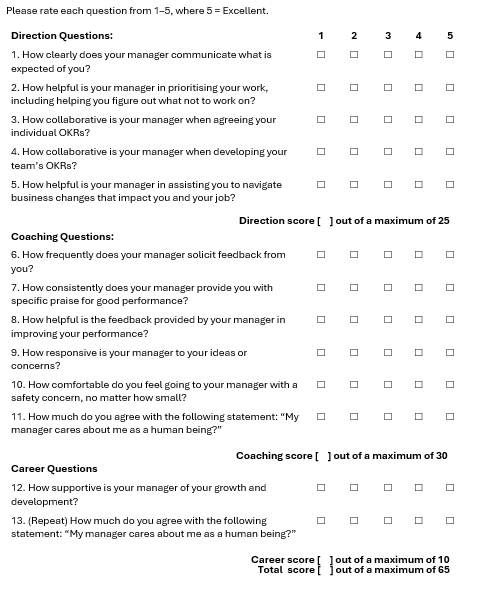
If you want to take this survey, then please click the link below and discover your score.
Complete the Direction, Coaching, Career Survey for Managers here.
The book and other resources
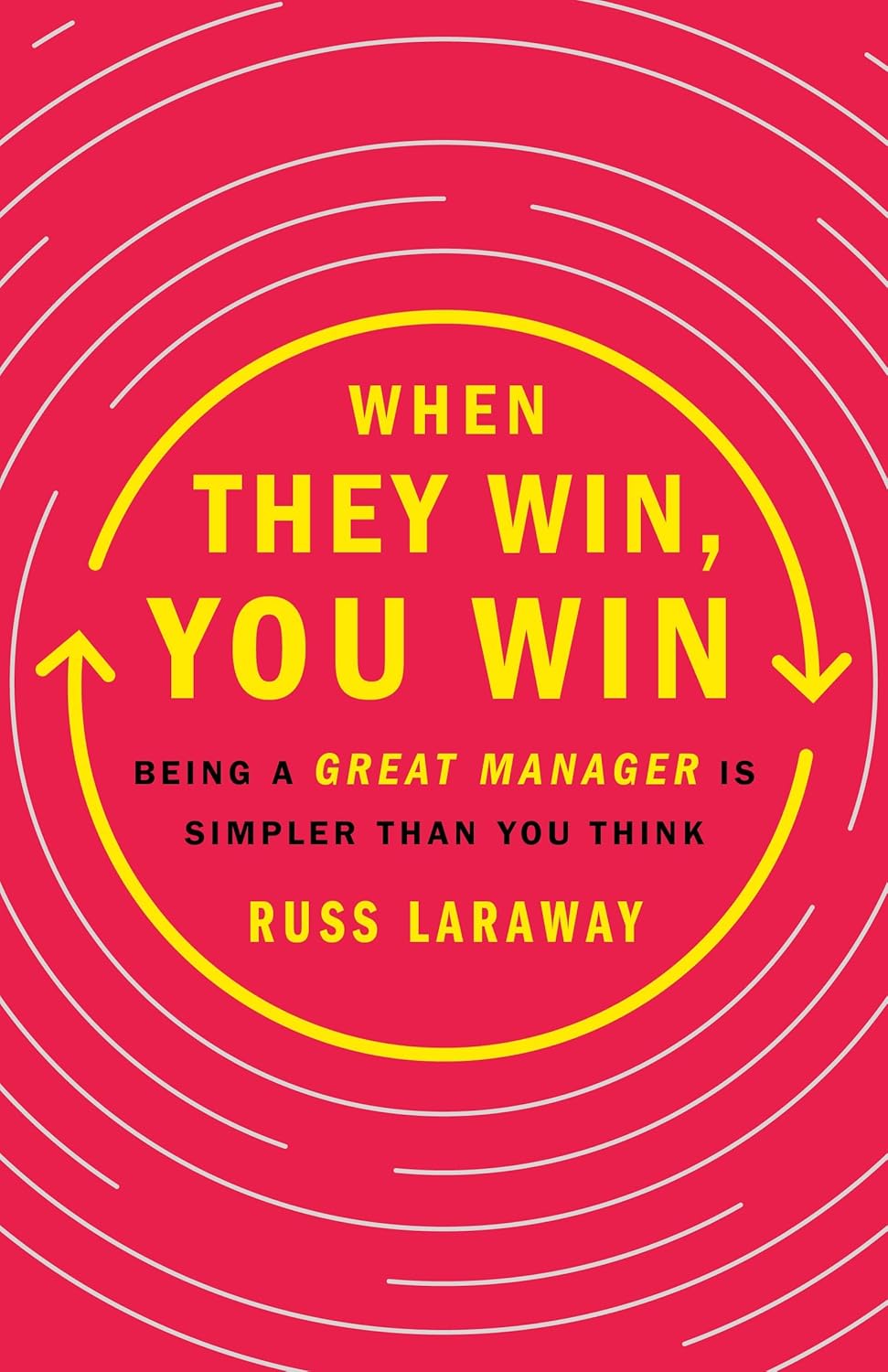
When They Win, You Win
Russ Laraway
Laraway streamlines how to achieve the results you seek by outlining three key conversations: giving direction, coaching for improvement, and discussing careers to show genuine care.
We suggest you devour the details in Laraway’s book to enhance your skills and results as a manager.
What people are saying about this book:
"So much of what I describe in Radical Candor, I learned from Russ Laraway." – Kin Scott, author of Radical Candor
“If anyone can help smart leaders develop the humility and self-awareness needed to learn, it’s Russ Laraway.” – Liz Wiseman, author of Multipliers

Listen to this April 2024 podcast discussion, part of the ScaleX Insider podcast series. In this episode, Brendan McGurgan talks to Russ Laraway about his time at Google, Twitter, and Qualtrics, and they discuss his book, When They Win, You Win. He talks about his time in the US Marines and shares some wisdom and actionable strategies for navigating the complexity of today's changing business world.
Click the links below to listen to the podcast:
Click here to listen to the podcast on Apple Podcasts
Click here to listen to the podcast on Spotify
Here is another interview with Russ Laraway, hosted by Jeremy Utley. In this interview, Russ shares insights on how being a great manager is simpler than you think.
And finally, here are a couple of YouTube shorts taken from The Radical Candor podcast on the secret to being a successful leader. There are more on YouTube if you want to dive further into the subject.
YOUR SUPPORT TOOLS ARE HERE:
Click the button below and you'll be able to download a PDF version of this page.